
A leaking or damaged grader hydraulic hose needs assessment before the machine goes back to work. Exposed wire, a split cover, a crushed section or hardened rubber can justify withdrawing the assembly from service. Stop work and keep clear of the failed line. A failed assembly needs replacement, rather than a patch to the damaged hose.
For a Victorian civil-works business, a grader back at a northern Melbourne depot may need more than another hose. When a replacement fails in the same place, the damaged length is only part of the assessment. The technician also needs to consider the movement around that particular line. Another replacement can meet the same rubbing point or strain if its cause remains.

On an articulated grader, the frame bends between its front and rear sections. Wheel lean and changes in blade position add other movements. A manufacturer overview of grader articulation describes frame movement and wheel lean, while directing machine-specific guidance to the operation and maintenance manual.
Each of those movements changes the space around the lines that serve it. A hose sitting well clear while the machine is parked can be pulled tight once work starts. It can also be pressed onto a bracket or dragged along the frame. The technician needs to consider both the leaking circuit and the part of the machine that moves.
Hose installation guidance published by an Australian manufacturer accounts for movement, flexing and abrasion. A clear route while parked does not establish clearance through the movement relevant to that line.
Which hose runs where is not the same on every grader. That belongs to the machine’s operation and maintenance manual and to the technician on the job. Working a damaged machine to watch the hose is not a test anyone should run.
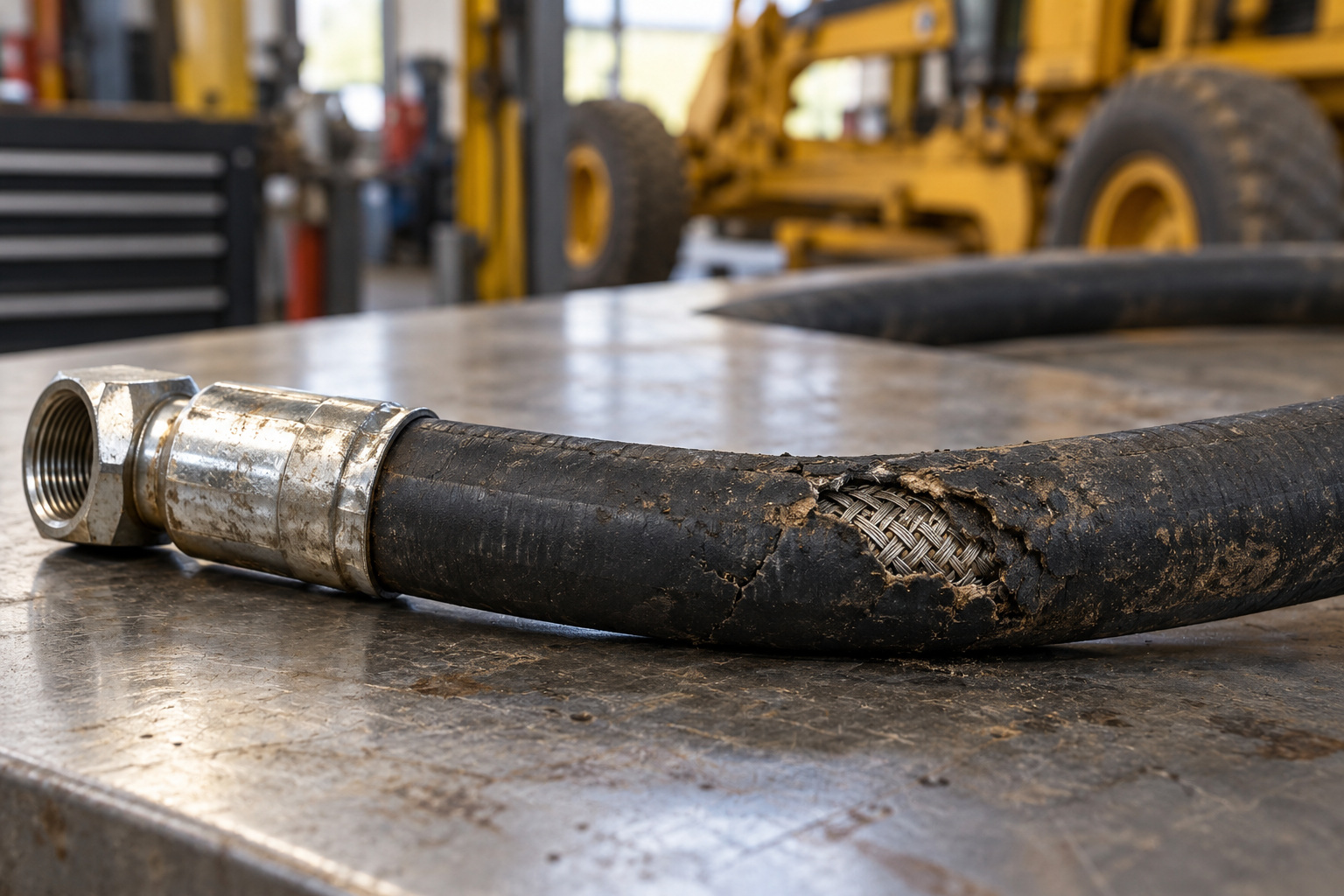
Visible defects that call for stopping work and competent assessment include:
These are signs for competent inspection, not a way for an operator to approve a line for further use. WorkSafe Victoria’s Plant Compliance Code calls for damage assessment and inspection and maintenance informed by the manufacturer. The list does not set a legal inspection timetable.
A damaged pressurised line can release oil or move unexpectedly. WorkSafe Victoria’s alert on high pressure hose whip says an unsecured pressurised hose that disconnects will typically whip or flail until the system is depressurised. It also says hose contents may spray and injure anyone in the vicinity.
The Victorian plant code also identifies injury from fluid injected through the skin. Nobody should put a hand near a pressurised leak to find it.
Stop work, keep people clear and follow the machine’s shutdown and site isolation procedures. Leave hydraulic inspection, isolation and repair to a competent technician. Do not open a fitting or test the leak by hand.
WorkSafe Victoria warns that energy can remain after the energy supply has been isolated. This includes hydraulic oil under pressure and gravity. Stopping the engine does not establish that the hose is depressurised or a raised blade is secure. Keep clear of unsupported components. A competent technician must control those hazards under the machine’s manual and site procedure before work starts.
What you can see is a defect, not a verdict on the machine. A blade that feels slow is not proof the hose is the problem.
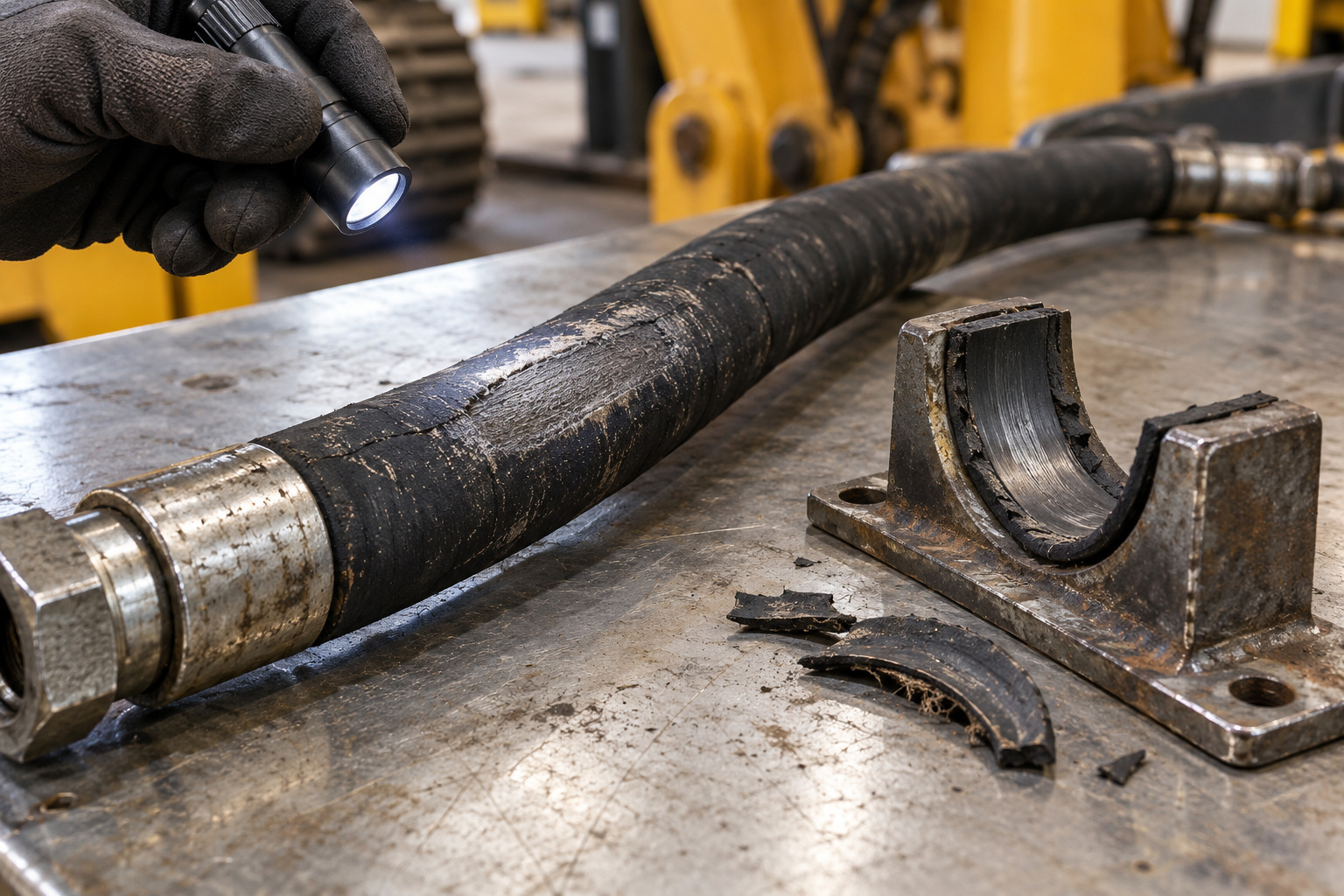
A repeat failure can mean the condition that damaged the first assembly is still present. It does not prove that the hose itself, its selection or its installation was fault-free.
At a moving section of the grader, possible causes include contact with a bracket edge, damaged support, worn protection or a route that becomes tight. The relevant movement depends on the circuit and the machine. A technician assesses those conditions alongside the failed assembly, rather than assuming every repeat leak has one cause.
The Australian hose installation guide addresses length for flexing, abrasion and support where movement changes direction. Those principles need to be applied to the particular line and machine. At a second failure, the technician assesses the support and contact points along with the assembly. A heavier hose alone does not establish that the cause has been corrected.
The general detail of how a hose is clamped, guarded and supported is set out in its own article.
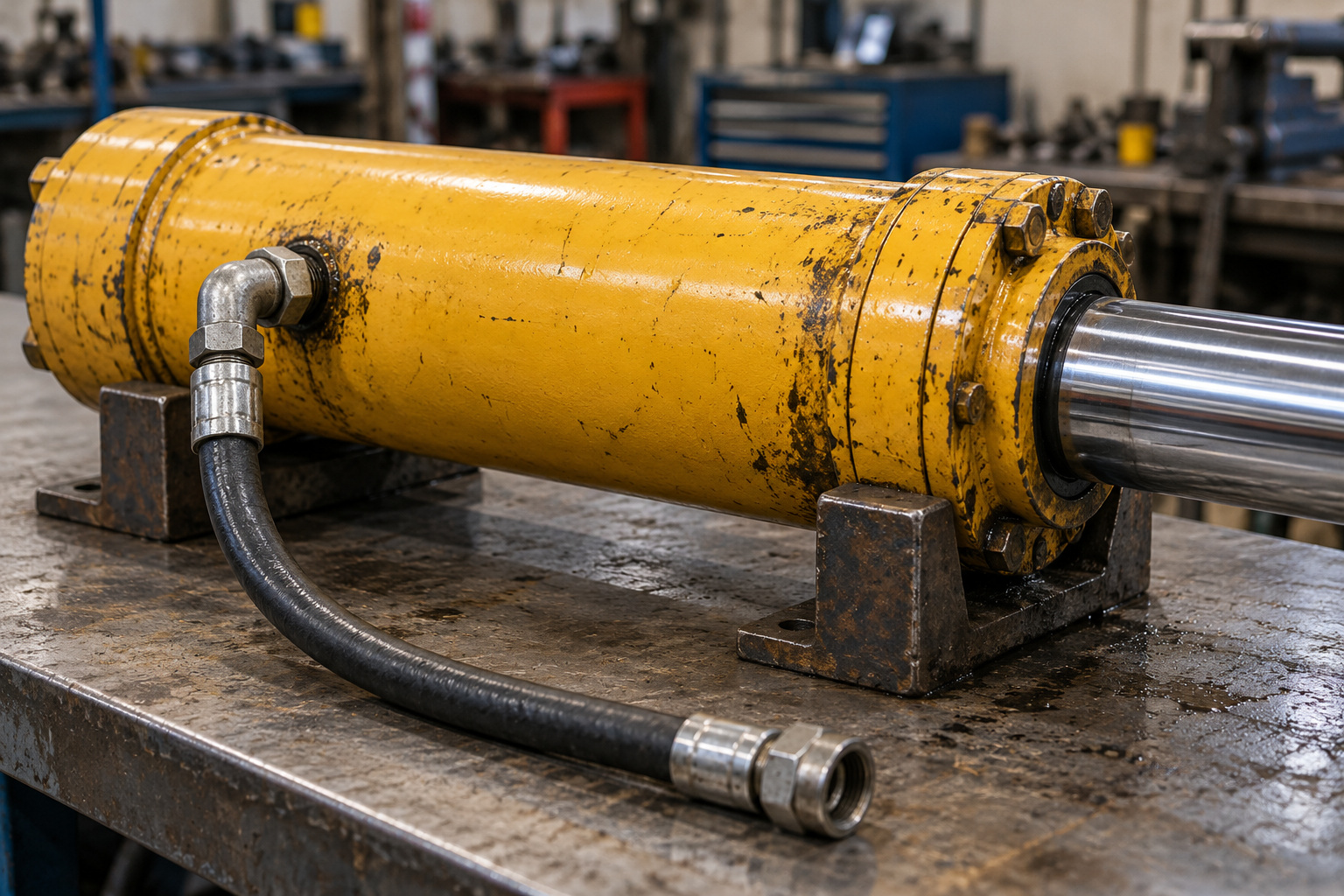
Oil near a cylinder does not identify which part has failed. The source may be a hose, a connection or the component itself.
A damaged clamp and a leak location are observations. Neither proves a cylinder needs resealing or a pump is finished. A grader that still works poorly after a hose change needs further assessment rather than another assumed hose fault. The machine’s maintenance information and the actual findings guide that work.
A commercial hydraulic repair assessment looks beyond replacing the visible damaged length. The job is to distinguish assembly damage from problems with connections and support, then assess whether anything else needs attention.
Ace Hoses can assess a grader line on site in the northern industrial suburbs, or at the Campbellfield workshop for larger work. If the machine model and the affected circuit are already known, and safe to check with the machine stopped, send those details through with your enquiry.
No. Take the machine out of service and arrange competent assessment. Leakage is on the published withdrawal list even when it looks minor.
No. Stop work and arrange competent assessment and replacement of the failed assembly. A patch is not a way to keep working or move the grader to finish the shift.
Not by itself. Oil at that end can come from the hose, a connection or the component. A technician separates those before anything is pulled apart.