
Almost everything needed to order a replacement hydraulic hose is printed along its side. The printing gives the maker, the standard the hose is built to, and the inside diameter as a dash size. Most also carry a working pressure and a production date. Two things are not printed. The overall length between the two fittings has to be measured, and the thread on each end has to be identified.
This one is for the tradesperson, fleet manager, maintenance person or machinery operator with a failed hose in hand. You know what the hose does. The row of numbers along the side of it is the part nobody explains.
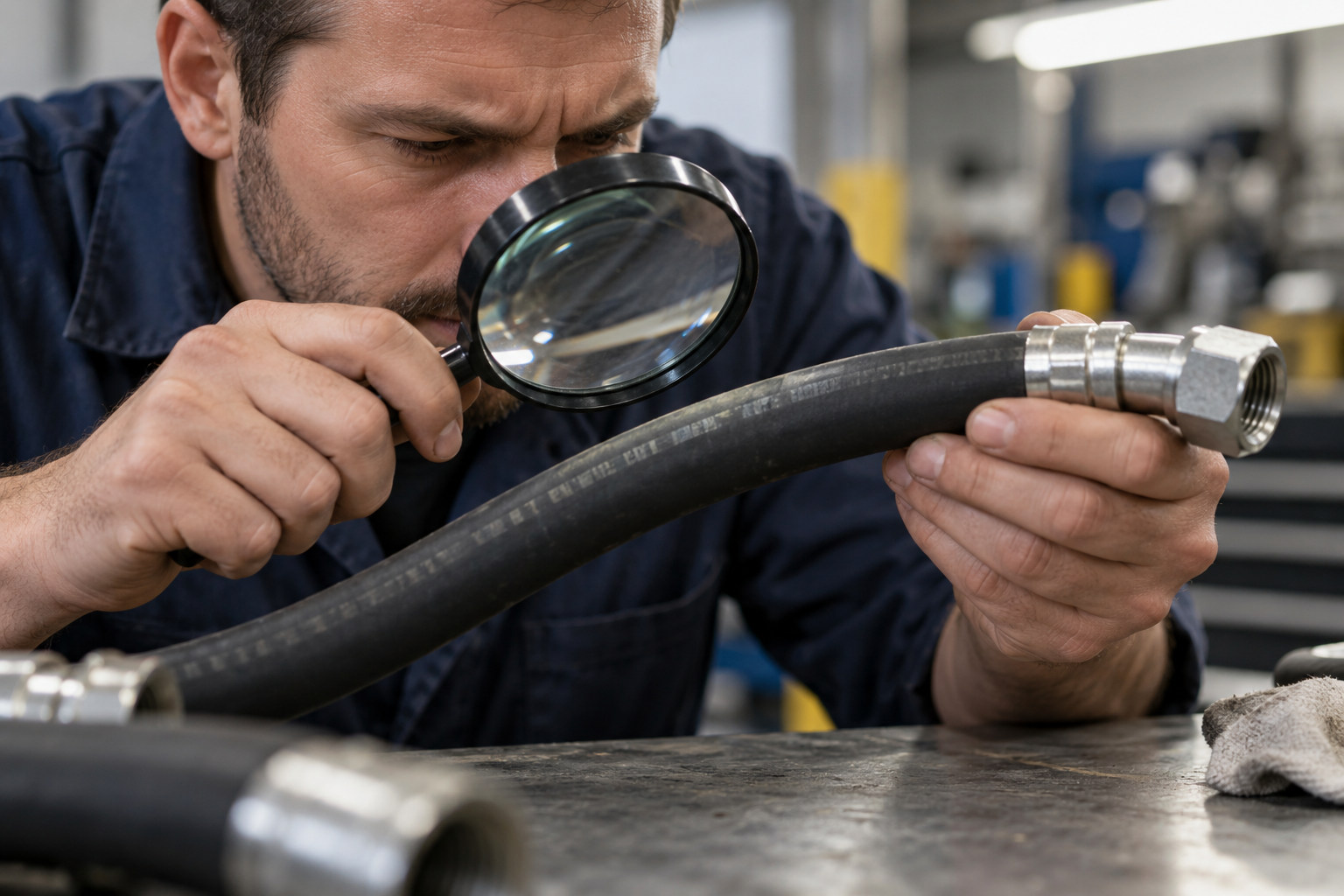
The printing along the side of a hose is called the layline. It is the hose’s own spec sheet, and it runs in a set order.
First comes the maker’s name or logo, then their series name for that hose. Next is the construction standard and type. EN 853 2SN is a two wire braided hose built to a European standard. SAE 100R is the American series, and the number after the R names the type. These are standards, not part numbers.
Then comes the size, written as a dash size, which counts the inside diameter in sixteenths of an inch. So -6 is 3/8 of an inch, and -8 is half an inch. Hoses are sized on the inside diameter, tubes on the outside.
One family of reduced bore hose follows the tube size instead, so its dash number does not give the bore. It is one more reason to match the old assembly rather than a number.
After the size comes the working pressure, marked WP. Working pressure is what the hose is built to run at in service, usually given in both MPa and psi. Last comes the production date or batch code, which is the only way to tell a hose’s age. Makers use different code formats, so read it as a date stamp and no further.
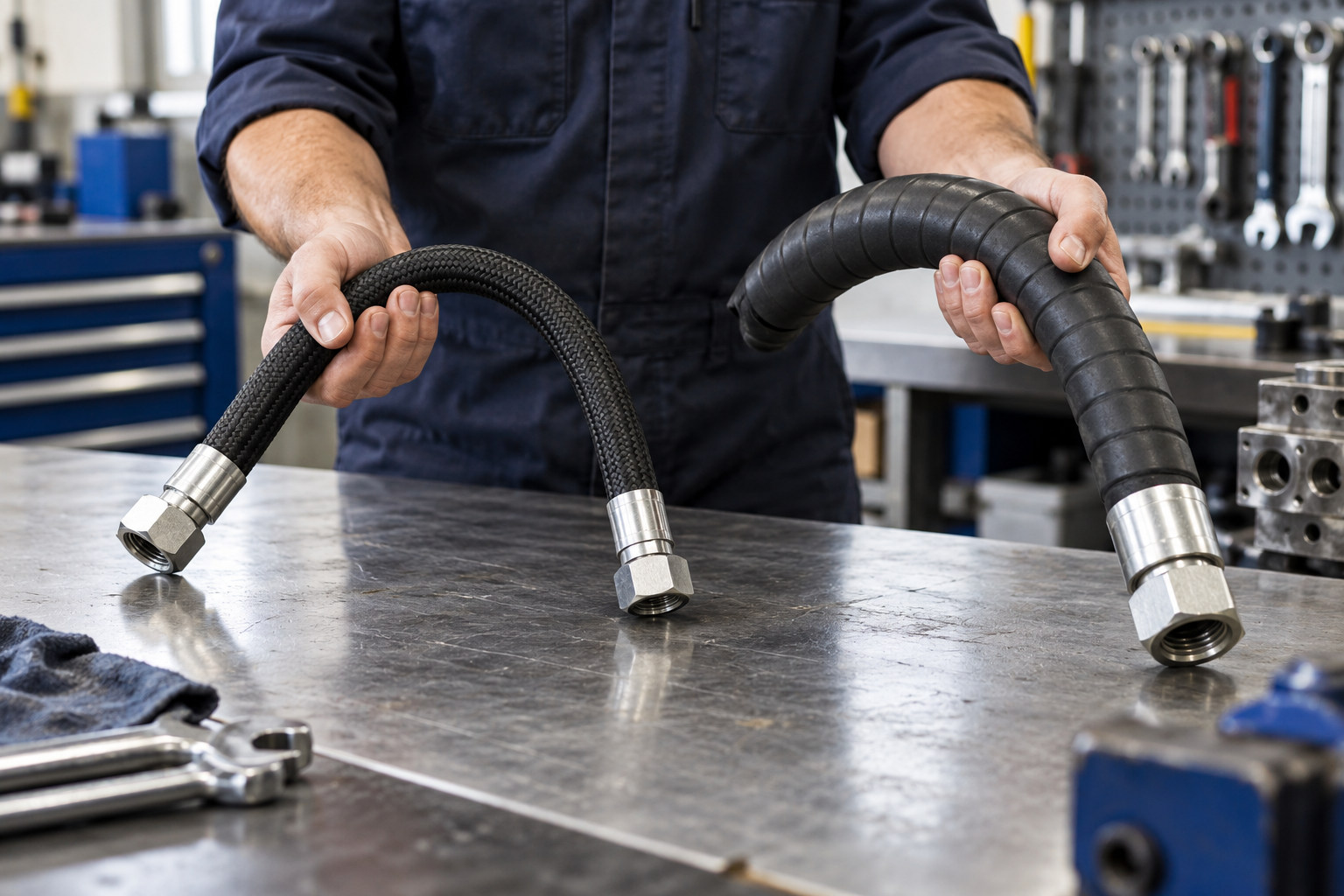
Braided and spiral describe how the wire under the cover is laid. Braided hose has one or two layers of wire woven around the tube. Spiral hose has its wire wound on instead, usually in four layers. It is the construction used for higher pressure.
Within one hose type, the working pressure falls as the diameter rises. One common two wire braided hose is rated at 140 bar at 31.8mm inside diameter. The same hose at 50.8mm is rated at 90 bar. A bigger hose is not a stronger hose.
A rated working pressure is not a bursting point. Those ratings usually use a 4:1 safety factor, so the minimum burst pressure is four times the working figure.
What the cover and the wire are made of changes how long a hose lasts, not what you order. Our guide to modern hydraulic hose materials covers that ground.
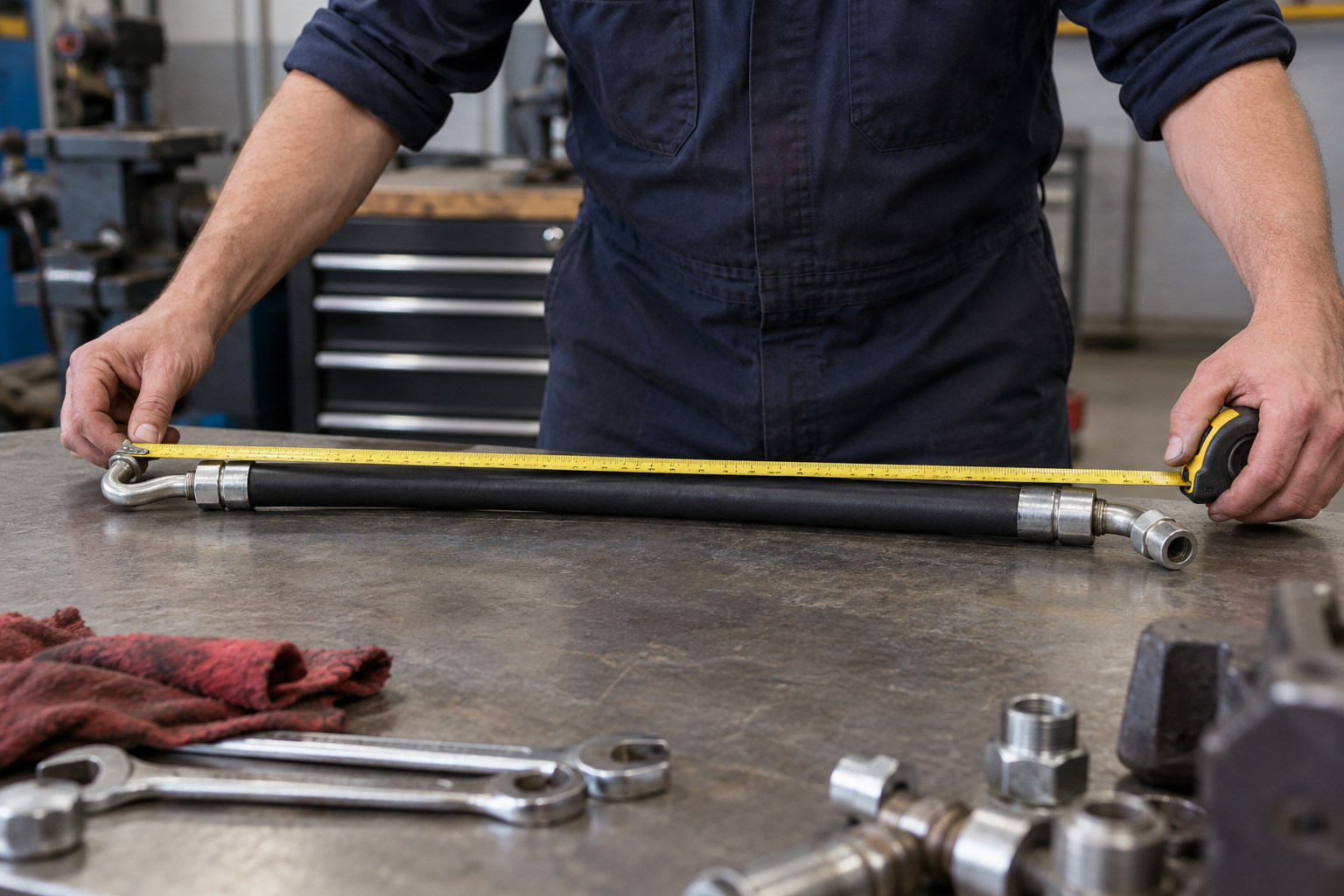
Overall length is the length of the finished assembly between its two ends, not the length of the rubber. That difference is where a wrong length usually starts.
The point you measure to depends on the fitting. A male end is measured to the tip of the fitting. A face seal or a flange is measured to its sealing face. Other ends have their own reference point, so a hose can be described correctly and still come back wrong.
An angled end is measured to the centre of the bend, whether it is 45 or 90 degrees. The tape runs to the middle of that bend, not around the corner.
Then there is how the two ends sit in relation to each other. Both can be the right size, the assembly the right length, and the hose can still fight the machine. Hold one end flat and treat it as the starting point. Then say how far round the other end is turned.
Because the reference point changes with the fitting, the old assembly is the safest thing to hand over.
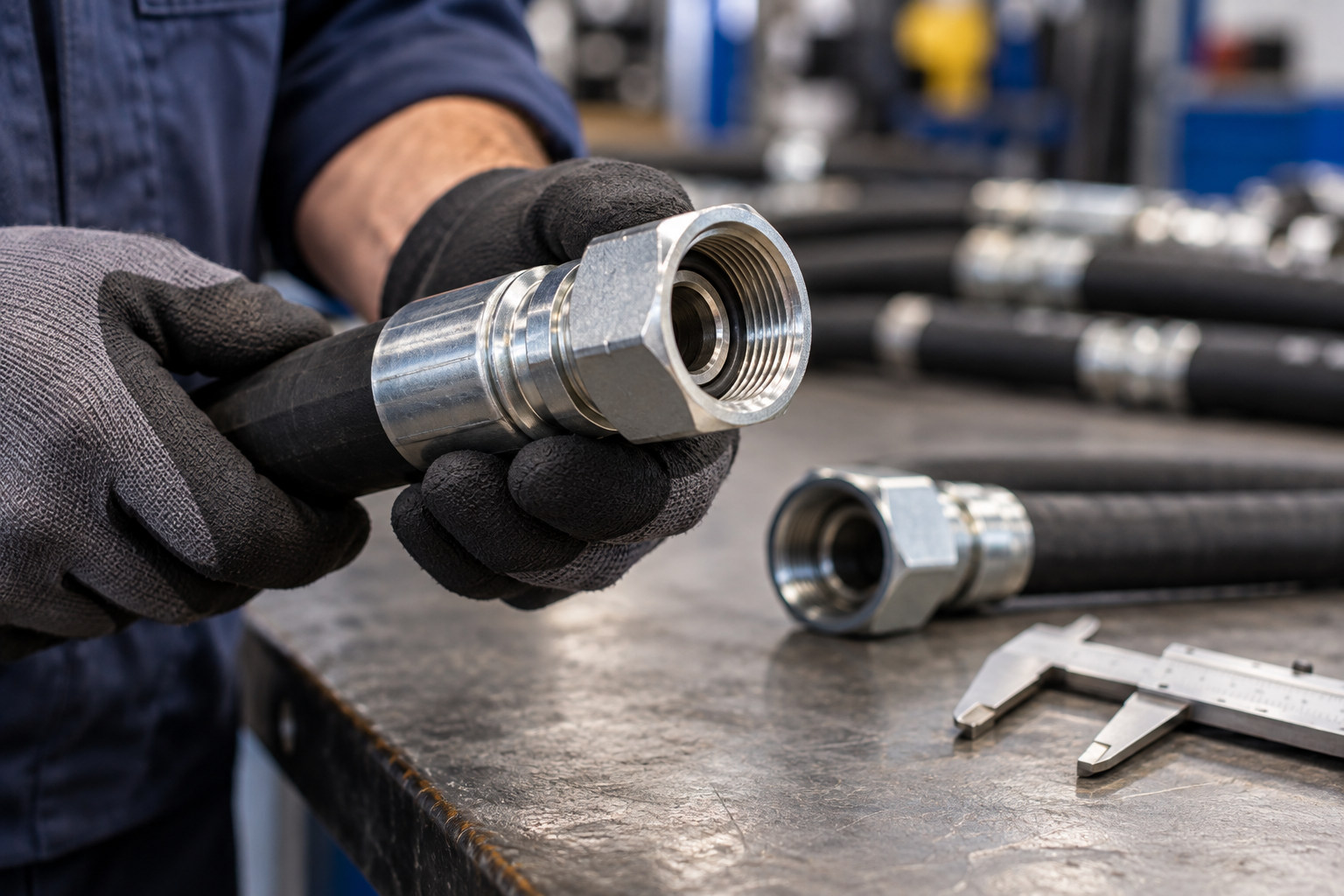
Part of a thread can be read by eye, and part cannot.
What you can see is the seal. An O-ring sitting on a flat face is an ORFS end. A cone or flare inside the nut is most often a JIC, which seats at 37 degrees. A thread that holds the same diameter along its length is parallel. One that narrows towards the end is tapered. BSP comes in both forms. NPT is tapered, and seals on the thread itself.
What you cannot see is the thread form and the pitch. BSP threads are cut at 55 degrees, on the Whitworth form. The other families in common use are cut at 60 degrees. That is close enough for a BSP fitting to start onto a metric or JIC thread, and far enough apart that it never seals. A fitting that spins on and feels firm can be sealing on nothing.
So the seat shape narrows it down and gauges settle it. Photograph both ends, or bring the assembly in. Which fitting a job should have is a separate question. Our guide to choosing hydraulic fittings for high pressure work covers it.
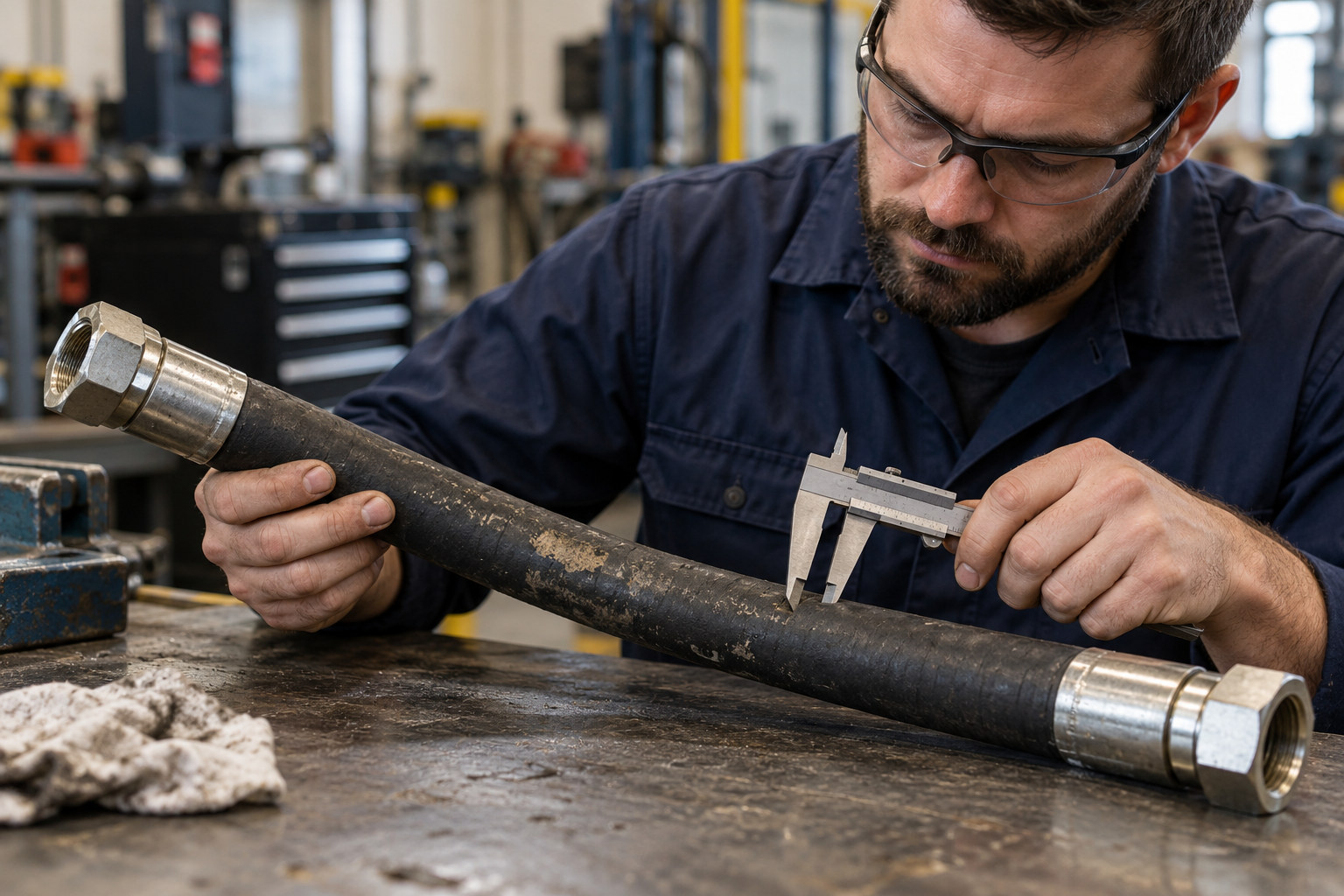
A worn layline is common on an older machine and does not stop the job.
Where the printing has gone, the hose is cut and the inside diameter measured. That is the size, because hose size is the bore. The outside of the cover is not.
The cut end tells you one more thing. Count the layers of wire and you know whether the hose is one wire, two wire or spiral. That narrows the type, but gives no pressure rating, and nothing visible at the cut does.
The machine’s manual or data plate may carry the system’s working pressure.
With the markings gone, the assembly is the only specification left. That is the argument for carrying it in rather than describing it by phone. A crimped assembly gets remade rather than mended in any case. If the line was never a stock item, our page on custom and non-standard assemblies explains how one gets built.
It all comes down to three jobs.
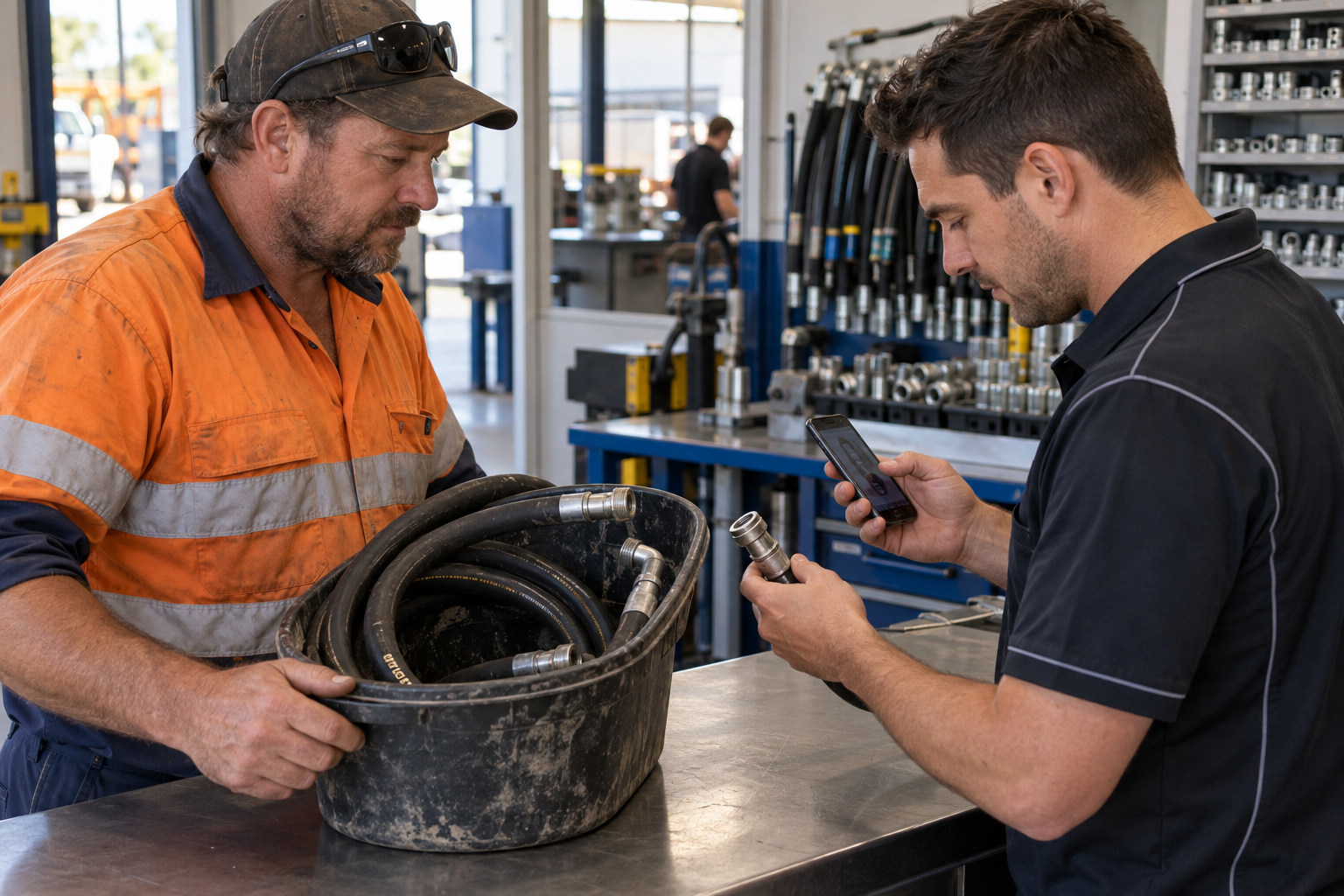
At the counter in Campbellfield, a fair bit of this arrives in a bucket, which works too.
So bring the old assembly in to Rex Road, or send photographs, and the new one gets built to match. That is how hydraulic hoses get replaced without a second trip. Where the machine cannot be moved, ring Ace Hoses and the work can come to it.
It is the inside diameter counted in sixteenths of an inch, so -8 is half an inch. One family of reduced bore hose is sized off the tube instead. That is why the old part beats a number.
End to end along the finished assembly, never along the rubber. Where the tape sits depends on the fitting, and a bent end is measured to the middle of its bend. Note which way the ends face.
A photo settles the shape: the seat, the flare or the flat face, and whether the thread runs parallel or narrows. It cannot settle thread form or pitch, which need gauges. A photo with the fitting sizes gets a long way, and the assembly gets the rest.
The hose gets cut and the bore measured, because that is what hose size is. The wire layers at the cut show whether it was one wire, two wire or spiral. They say nothing about pressure. Keep the old assembly, because it is the specification.