
A forklift loses lift halfway up a racking bay. An excavator boom creeps down while it sits parked. A tipper body sinks under load when it should hold. Each one points to a hydraulic cylinder that needs work.
A leaking or drifting cylinder does not always mean a new one. In most cases a reseal is the hydraulic cylinder repair that gets a Melbourne machine back to work, for a fraction of the cost of a replacement. It holds as long as the rod and the barrel bore are still good.
Ace Hoses does this work in-house at Campbellfield. The first move is always the same. Find out what has failed before anyone orders a new cylinder. The answer changes what the job costs and how long the machine sits idle.
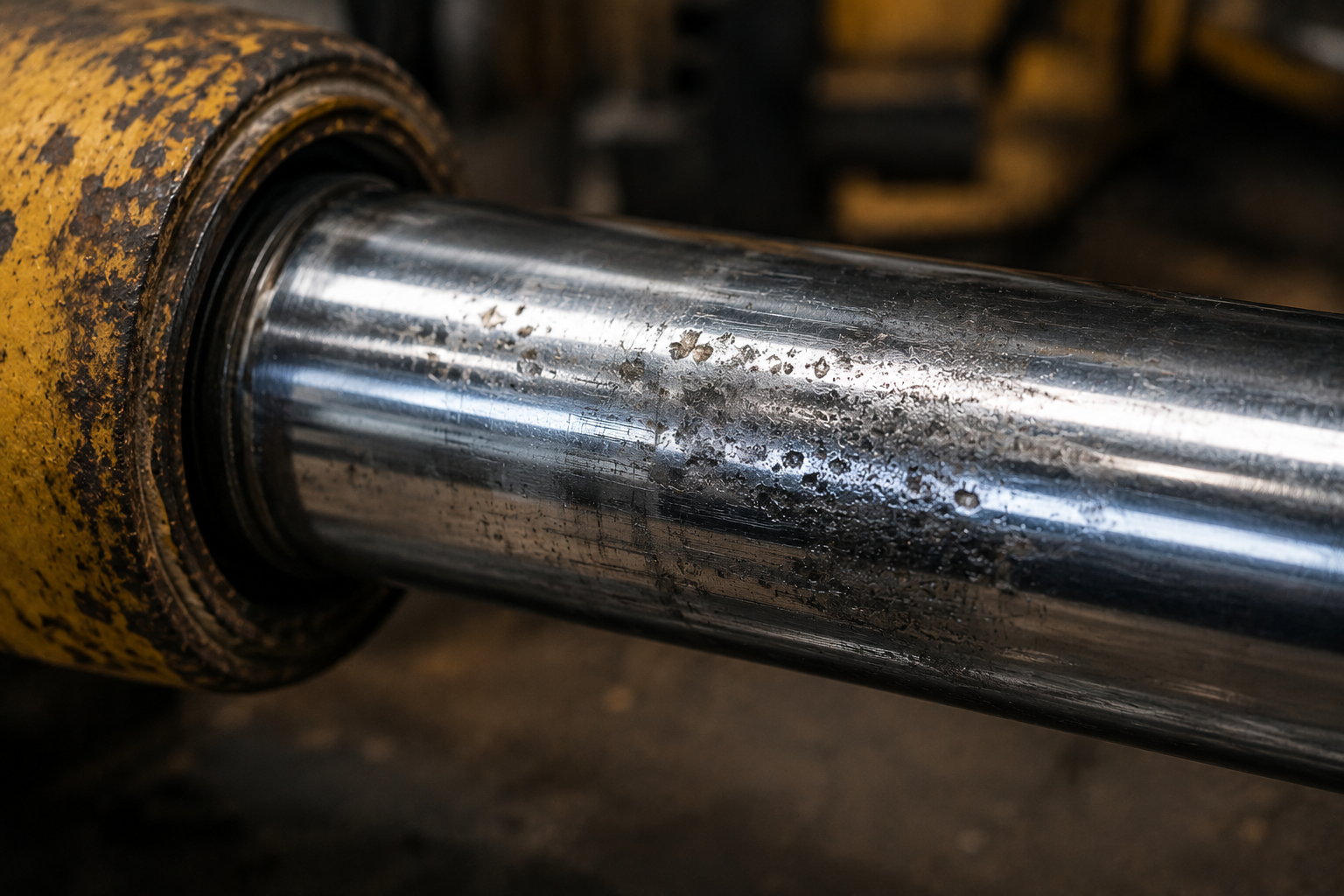
Two things tell you most of what you need to know: where the oil shows up, and how the cylinder behaves under load.
An external weep at the rod gland usually points to the rod seal. Oil films the rod, gathers at the gland, then drips. That is a seal job, and a reseal fixes it.
Drift or creep under load is a different signal. The cylinder shows no leak on the outside, yet the load still sinks. That is internal bypass, where oil slips past a worn piston seal from one side to the other. A reseal fixes that too.
Some damage a reseal will not fix. These are the signs the job is bigger:
When one of these shows up, a reseal on its own buys you a few weeks at best. The full reseal-versus-replace decision, including where the numbers land, sits in a separate guide on the Ace Hoses blog. This article picks up after that point, when you want to know what a reseal looks like for your machine.
Forklift cylinders work under constant duty in dusty yards, and the seals wear from the hours more than from any rough treatment.
The lift ram logs the cycles. Every pallet up and down is another stroke. When the rod seal wears, you see slow lift, a rod that films with oil, or a mast that settles under a held load.
Tilt cylinders fail their own way. A tilt that drifts, so the forks creep forward or back on their own, is a bypassing piston seal. On a machine that runs all day, both are reseal jobs when the rod and bore are sound.
Downtime is the real pressure here. A forklift is usually part of the daily flow, and running a picking operation a machine short slows every job in the yard. A reseal on a sound cylinder turns that around within a few days.
Excavator cylinders carry bigger bores and higher side loads, and they live in the most abrasive spot on any site.
Boom, arm and bucket rams take stone strike, grit and mud every hour they work. The rod suffers most. A flying stone chips the chrome, rust creeps into the chip, and the pit that forms starts tearing seals.
So chrome condition decides the job on an excavator. If the rod is smooth and the chrome is sound, a reseal holds. If the rod is pitted, the chrome has to be repaired before new seals go anywhere near it. Resealing hydraulic cylinders on excavators comes down to that rod inspection more than anything else.
A reseal is only as good as the inspection behind it.
A bucket ram that leaks after a rock-heavy job is worth pulling early. Left running, the pitting spreads up the rod, and a seal kit becomes a re-chrome.
A tipper body that will not hold up is a safety problem before it is a repair problem. A body that creeps down under load can trap a person or shift a load without warning, so it needs attention straight away.
Most tipper body hoists are single-acting telescopic rams. They are multi-stage, so the ram extends in sections to lift the body high from a short collapsed length. That design makes them more involved to work on. Each stage carries its own seals, and each stage has to be stripped, measured and rebuilt.
Because telescopic rams are complex, Ace Hoses handles them as a replacement rather than a reseal. If your tipper body ram is the culprit, the practical path is a replacement unit fitted and tested, so the truck goes back to work on a known-good hoist.
Plenty of other truck hydraulics reseal well. Tilt trays, hook lifts and tail lifts often run single-stage double-acting rams. When one of those weeps at the gland or drifts under load, a reseal brings it back, as long as the rod and bore check out.
A proper reseal is a strip, an inspection and a rebuild, with a pressure test before the cylinder goes back on the machine. Skip the inspection and you are guessing.
Here is what the job involves, start to finish:
The table below sums up how the common jobs break down.
| Equipment | Common cylinder | Typical symptom | Reseal usually viable? |
|---|---|---|---|
| Forklift | Lift or tilt ram | Slow lift, weep at gland, tilt drift | Yes, if rod and bore are sound |
| Excavator | Boom, arm or bucket ram | Drift, external leak, rod pitting | Depends on chrome and bore condition |
| Tipper body | Single-acting telescopic hoist | Body creeps down under load | Usually a replacement, so assess first |
| Tilt tray or hook lift | Single-stage double-acting ram | Drift, weep at gland | Yes, if rod and bore are sound |
Some cylinder work suits an on-site visit, and some has to come to the workshop.
A straightforward reseal on a smaller cylinder can often be done where the machine sits, which keeps downtime short. The Ace Hoses mobile service runs 24 hours across Melbourne metro for this kind of job, so a machine that goes down after hours does not have to wait for morning.
Heavier work comes to Campbellfield. A large-bore cylinder, a badly contaminated one, or a telescopic ram due for replacement is a bench job that needs the right tools and a proper test rig. Shortcut that on a workshop floor with the wrong gear and a clean reseal turns into a repeat repair.
One thing decides whether a reseal is money well spent: the diagnosis. A reseal is only as good as the inspection behind it, so get the cylinder checked before you order a replacement you might not need.
The reverse is worth knowing too. Running a cylinder that is already bypassing scores the bore and pits the rod, which turns a simple seal kit into a re-chrome or a rebuild. The longer a leaking cylinder stays in service, the smaller the chance a reseal will be enough.
If you have a cylinder playing up, get it looked at early. Bring the machine or the loose cylinder to the Ace Hoses workshop in Campbellfield, or call the mobile service for an on-site look across Melbourne. Either way, the assessment tells you whether a reseal will hold or whether it is time for a replacement.