
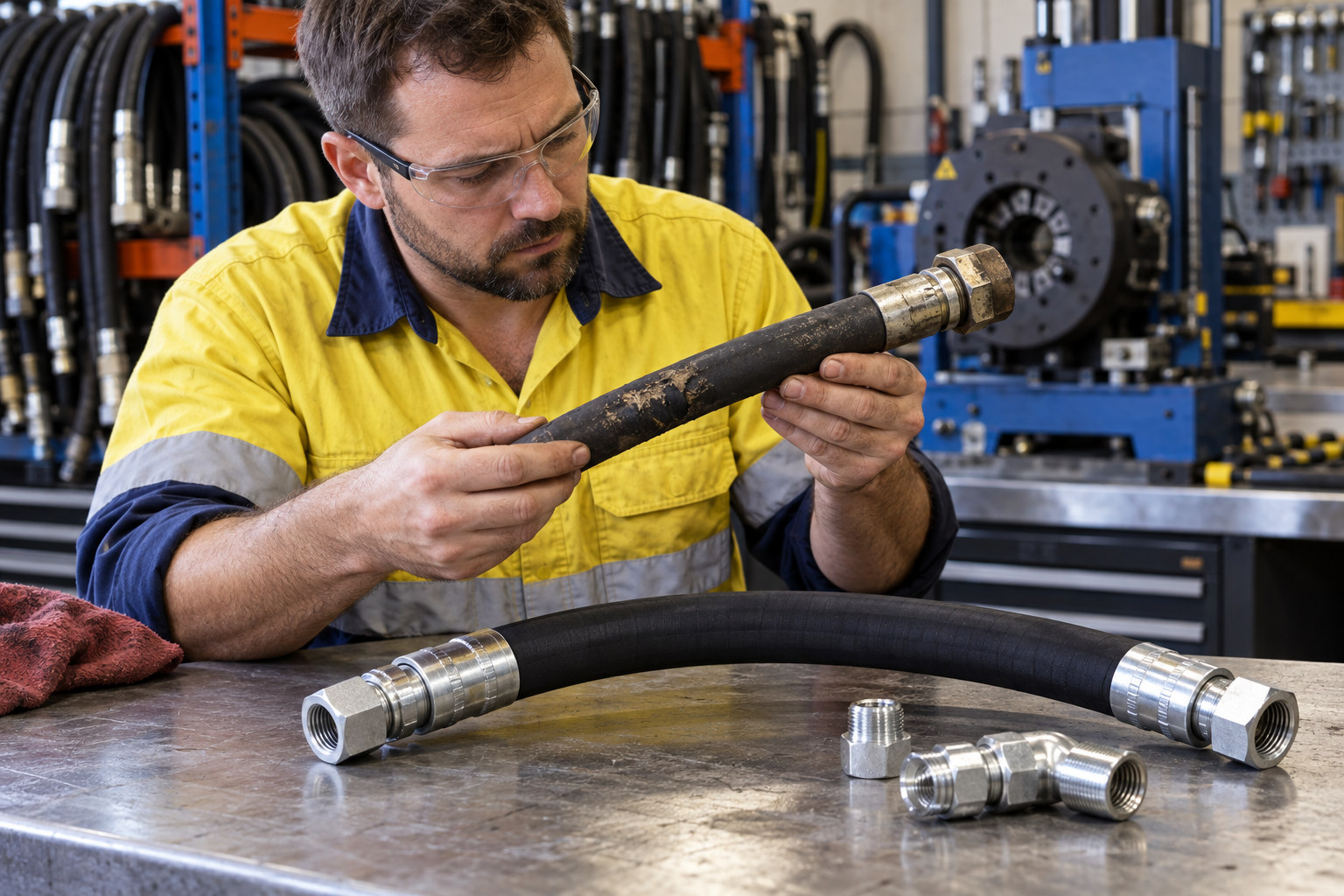
The word repair means something different at a hose counter. A job booked in as a repair is almost always a new assembly, built to match the old one.
What fails is the hose itself, or the join between the hose and its end fitting. Neither goes back to the pressure it was built to hold. So the old assembly comes off the machine. It gets measured, and a new one is made against it. You get the job you rang about. It is just not the same thing as patching.
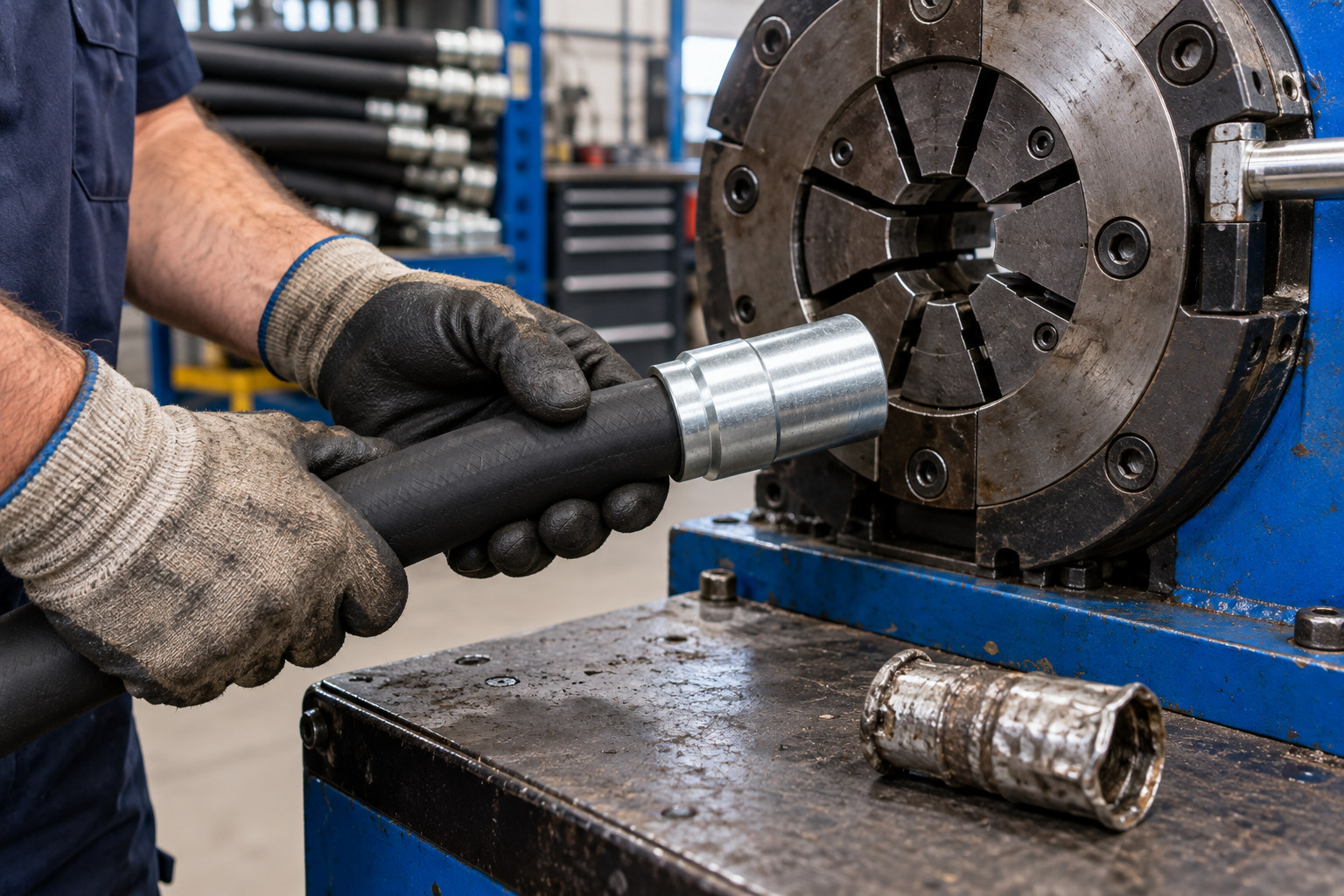
Crimping is the step where a machine squeezes a metal collar onto the hose under very high force. That collar is called a ferrule. A ferrule pressed on this way is also described as swaged.
The press is what makes the join hold. It deforms the ferrule into the hose cover and into the wire underneath. That shape is permanent. Cut a ferrule off and it comes away scored and out of round. Its grip is already spent. Put it back on and it will not hold the pressure it was rated for.
This is a rule about the crimped fittings used on high-pressure assemblies. It is not a rule about every hydraulic fitting ever made. Field-attachable and reusable couplings exist for some hose types and lower-pressure duties, and they are built to come apart. The assembly on a machine running high pressure is usually not one of them.
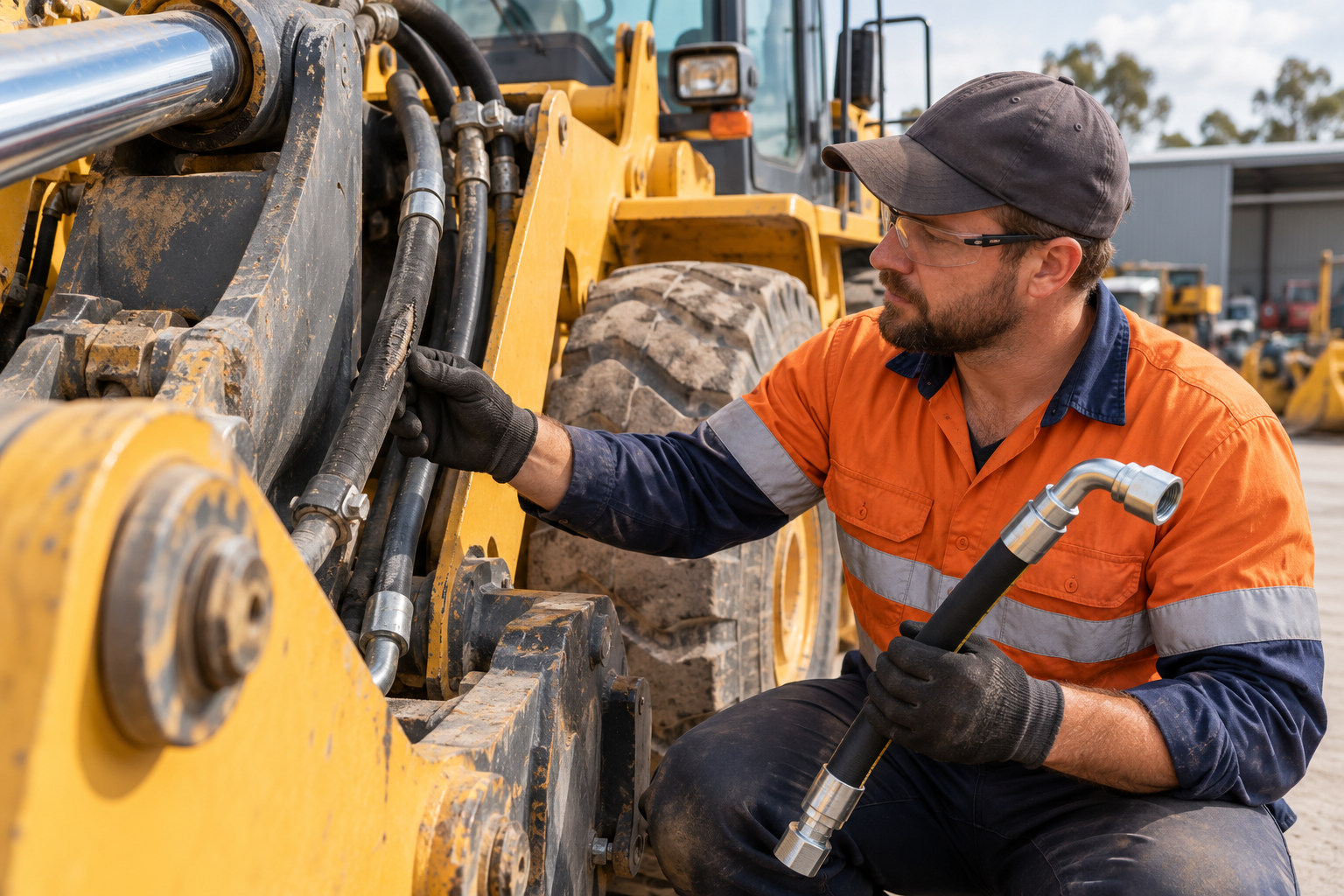
A wrap, a clamp or a sleeve over a damaged hose is not a repair, and it does not buy the machine more time.
Hose manufacturers’ safety guidance is firm on this point. A hose assembly that has failed must be replaced, and never patched or repaired. Published industry guidance treats a split, a tear, a puncture, exposed reinforcement or a leak as reason to withdraw the assembly from service. So the failed length comes out. It does not go back under pressure with a wrap around it.
The reason is what escapes, rather than what leaks. WorkSafe Victoria’s safety alert on high pressure hose whip says hose contents may spray and cause injury to anyone in the vicinity. The same alert says an unsecured pressurised hose that disconnects will whip until the system is depressurised. A patched hose left running is a hazard to whoever stands near the machine, not just a risk to the machine.
Shutting the machine down is not the end of it either. The same manufacturer guidance warns that stopping the pump may not clear the pressure still held in the line, because check valves can keep it there after the equipment is off. So the machine stays out of service, and the line is left alone until the pressure has gone. If the machine has to be shifted, it gets shifted with that line dead rather than driven on a patch. Roadside work on a vehicle is its own question, and our guide to trucks and tippers covers that ground.
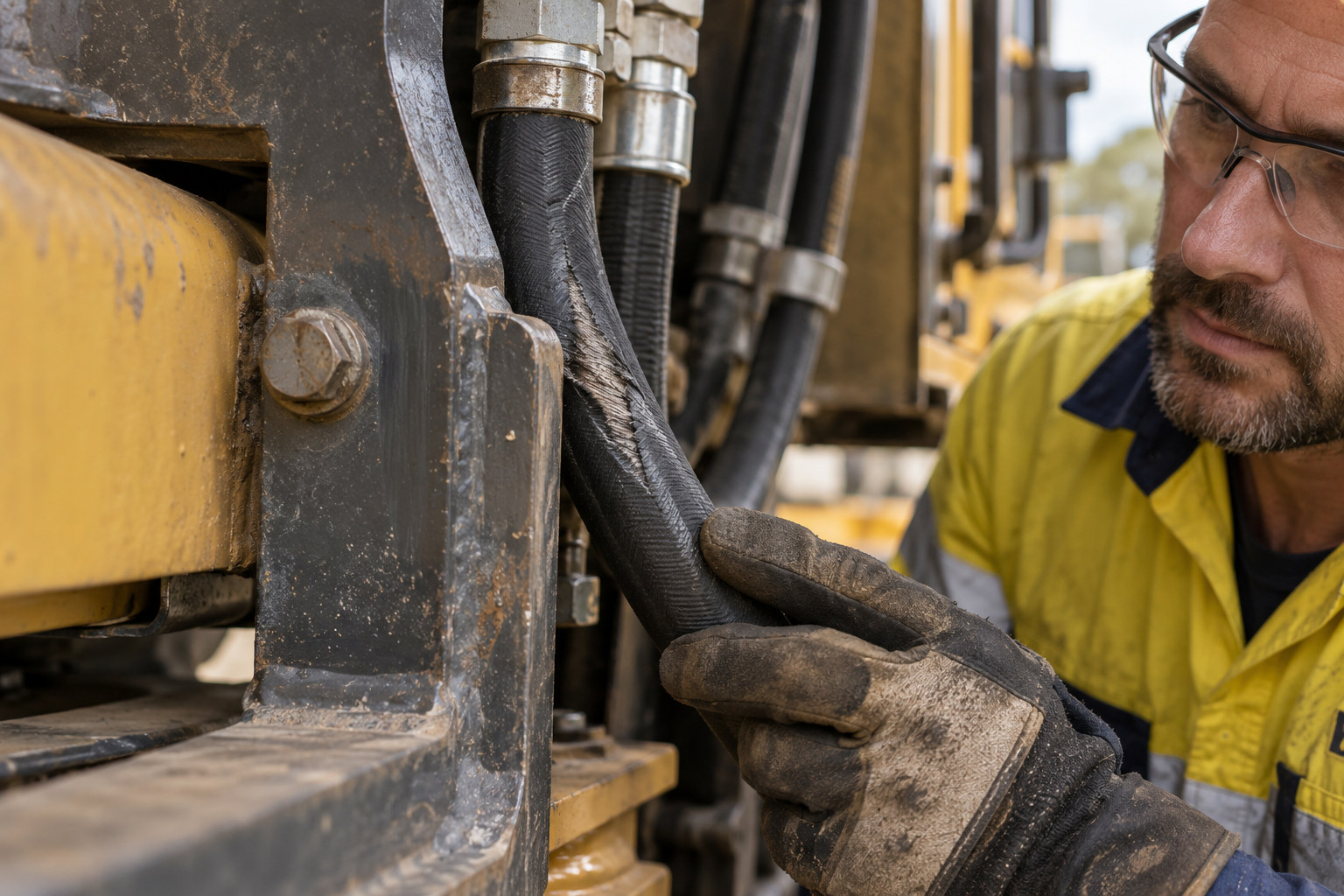
A hose that fails twice in the same place was the symptom. Something else did it.
The usual causes are physical, and they are all still there after the new hose goes on. A cover rubbed through against a fixed edge. A bend tighter than the hose will take. Heat from a component it rests against. Pressure spikes, a cracked hard line, or a worn adapter that never sealed. Replacing the hose without dealing with that is buying the same failure twice. There is more on the wider pattern behind repeat failures, and what it says about the system.
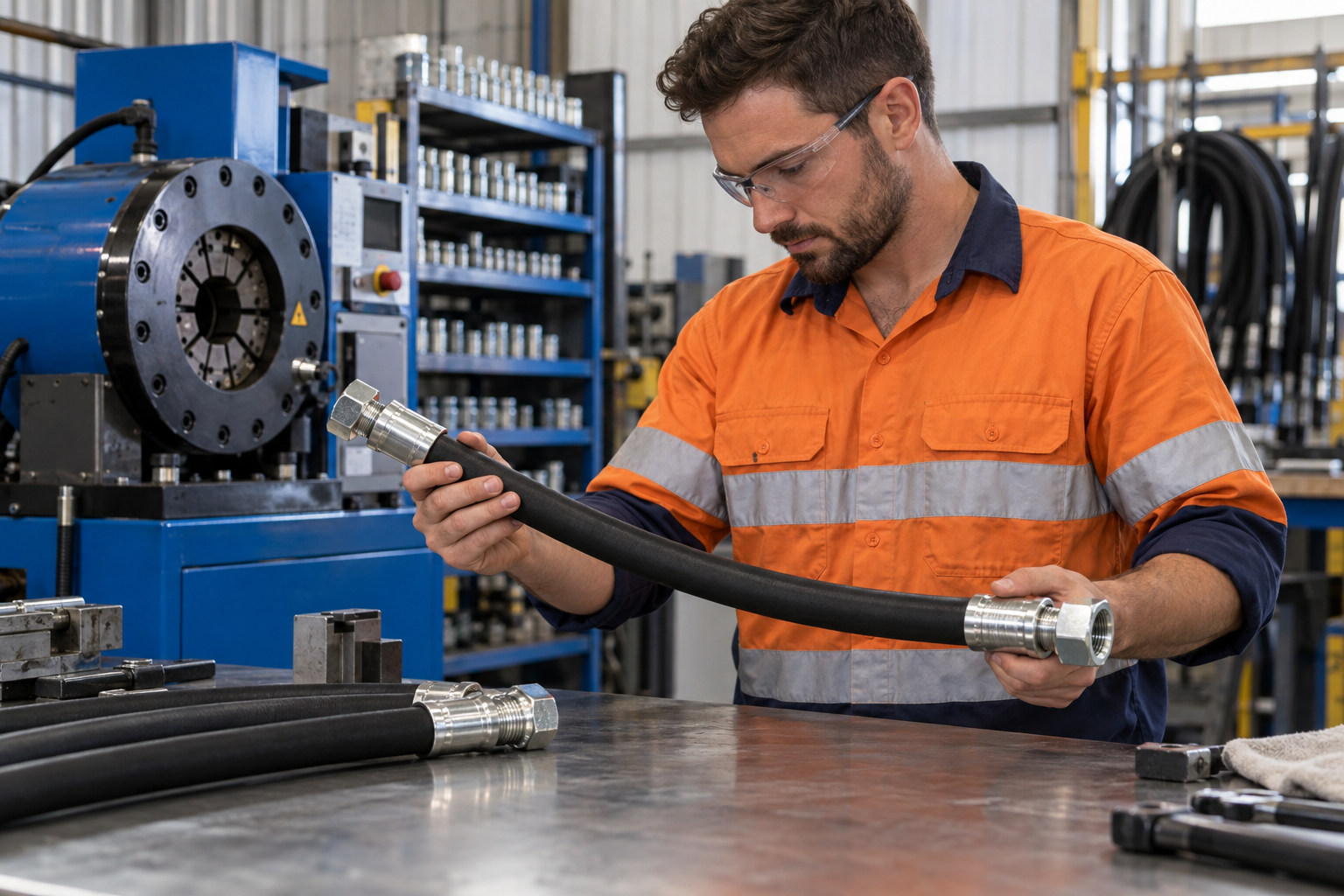
Making a replacement assembly takes four steps, and they happen in that order.
That last step is the one people skip when they picture this as a patching job. A new assembly is tested on calibrated equipment against its rated working and burst pressures. A test report can be produced where a site needs one for compliance or an audit. The assembly is proved before it carries load, not after.
The same four steps happen at the machine when a mobile service attends. Larger work still goes back to the workshop. Many hydraulic hose repairs end here, with a new assembly built to match the one that failed.
In the northern industrial corridor around Campbellfield, a machine stopped by one failed length is an ordinary Tuesday.
So if the assembly in your hand has failed, bring it in to Rex Road and the new one can be built against it. Where the machine cannot be moved, ring Ace Hoses for on-site attendance. Bring both ends with it. A length of hose with its fittings cut off is not a pattern, and the job slows while somebody works out what it used to be.
Not the crimped ones on high-pressure assemblies. A crimp is a one-time join, so once the collar has been cut off the assembly it is scrap. Lower-pressure work uses couplings built to come apart and go back together, and those are a different kind of fitting.
No. A wrap, a clamp or a sleeve gives nothing back to a hose that has already lost its pressure rating, and manufacturer safety guidance says a failed assembly is replaced rather than patched. Anyone working beside a patched line is working beside a hazard. The machine waits for a new assembly.
Because the new assembly went on to a fault that was left in place. The replacement meets the same edge, the same tight bend or the same worn adapter, and goes the same way as the first one. A second failure is a sign to change what the hose runs against, rather than to change the hose again.
Yes. A mobile service can build the assembly at the machine, so the machine does not have to move first. What decides workshop or site is the job rather than the hour, and larger work still goes in. There is more on what an after hours callout involves.