
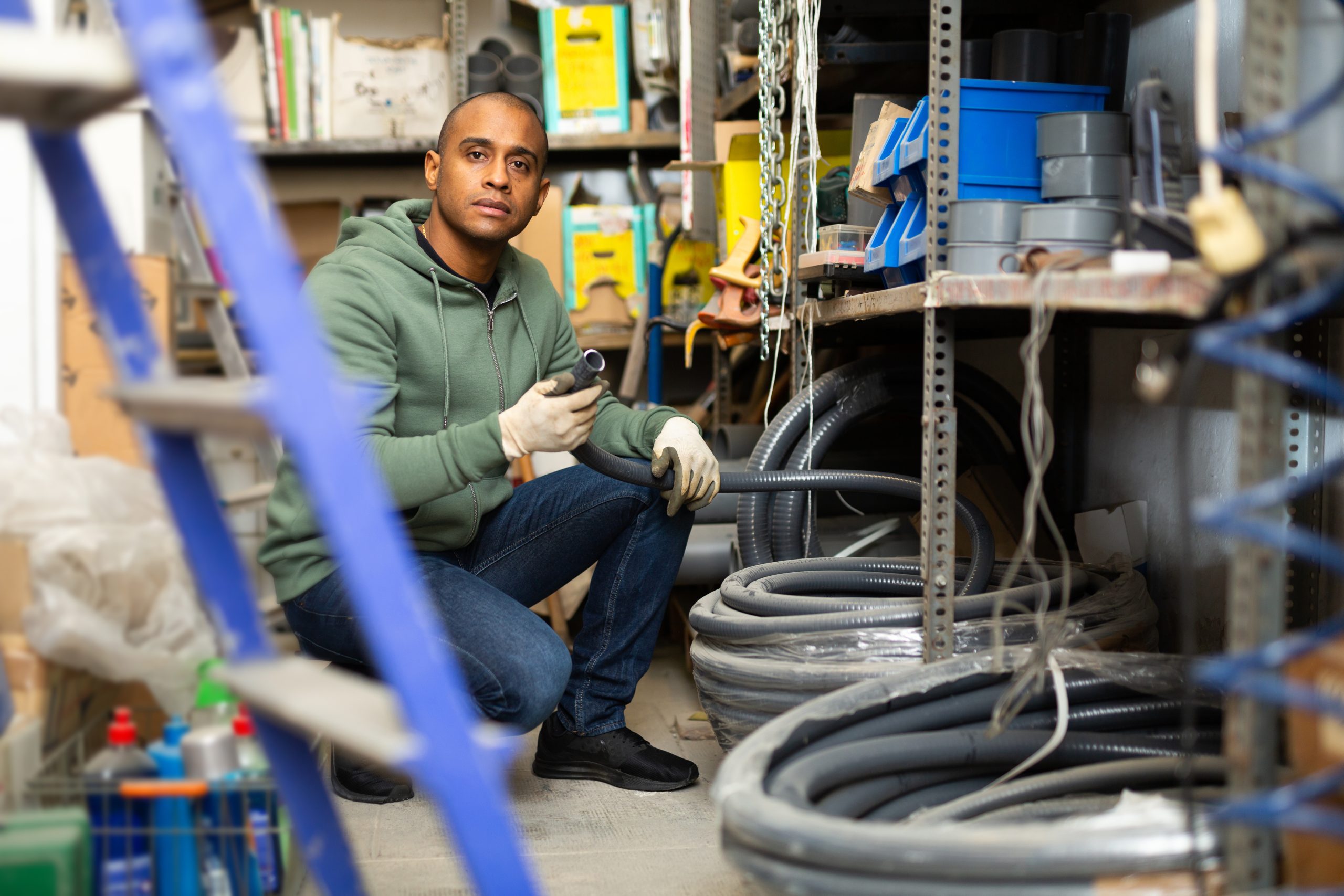
A hose rated to handle your nominal system pressure can still be the wrong product. Pressure spikes, pulsing demand and repeated cycling all shorten service life and reduce delivered pressure at the tool or actuator.
The bigger issue is pressure drop. Long runs, undersized bore, multiple quick-connect couplers and unnecessary reductions can strip enough pressure from the line that tools feel weak and cylinders slow down, even though the gauge at the compressor reads fine.
If operators are compensating by turning pressure up, that’s worth investigating before replacing any hardware.
Different tube materials behave differently in service, and the choice should be driven by the application, not by what’s on the shelf.
| Material | Suits | Watch out for |
|---|---|---|
| Polyurethane | High-flex applications, repeated bending, hand tools, moving assemblies | Can be damaged by certain solvents or sustained heat |
| Nylon | Structured routing, dimensional stability, higher-pressure circuits | Stiffer at cold temps, can stress fittings if forced into tight bends |
| Polyethylene | Light-duty, controlled environments, low-demand circuits | Less durable under abrasion or rough handling |
A stiff tube forced into a high-movement application will crack at fittings. A soft tube in an abrasive environment will scuff through. Material affects how the whole circuit behaves during installation and in service, not just how long the hose lasts on paper.
A line that holds pressure perfectly on a test bench can fail within weeks on a machine that cycles all day. The damage usually shows up in the same places:
Routing matters as much as hose choice. A technically correct hose installed on a bad route will still fail early. If you’re replacing the same line more than once in a few months, the problem is probably the route or the bend radius, not the tube itself.
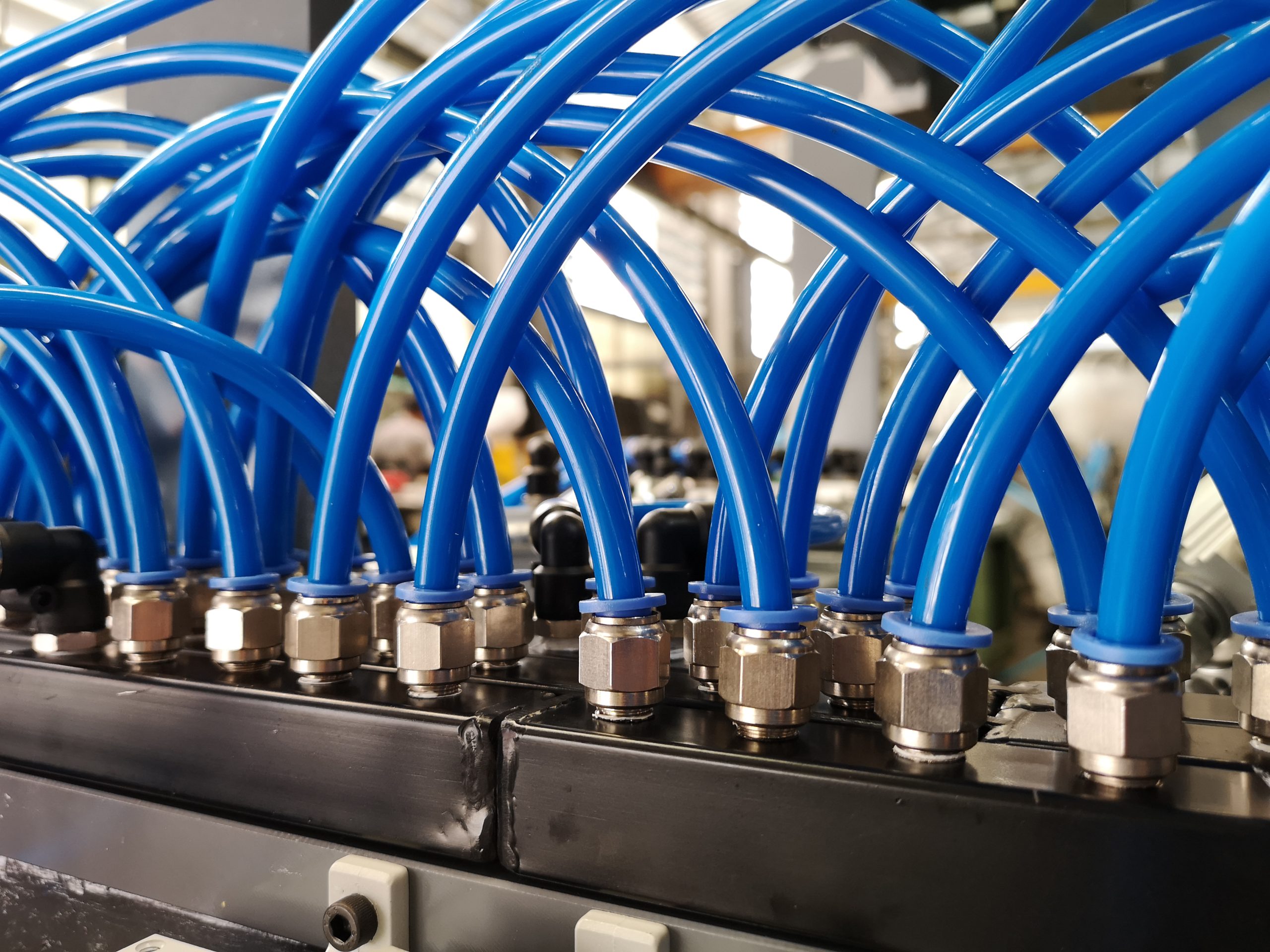
Pneumatic fittings tend to get less attention than they deserve. A connection that leaks or loosens under vibration can look like a hose fault, a regulator fault or a supply fault long before anyone checks the fitting.
Two things to get right:
The failure pattern in a workshop looks nothing like the failure pattern in a food plant or on a mobile rig. Choosing hose without thinking about the installed environment is how you end up replacing the same line every few months.
Workshops and fabrication bays. Hose gets dragged, stepped on, caught on edges and contaminated with oil, grinding dust and weld spatter. Abrasion and physical damage are the main killers.
Manufacturing and automation. Individual failures are less dramatic but more expensive. Small leaks across dozens of connections add up to measurable pressure loss, and a sluggish actuator on one station can slow an entire line.
Mobile equipment and field rigs. Vibration, limited routing space and dirty operating conditions combine to stress hose in ways that static installations never experience. Lines that are acceptable indoors often don’t survive long on a machine that moves, shakes and cops dust all day.
Not every hose fault announces itself with a burst. These are the quieter signs that something in the pneumatic circuit isn’t matched to the job:
If two or more of those apply, the issue is worth investigating properly rather than patching.
A hose cut too long creates loops, sag and handling problems. One cut too short sits in tension or forces a tight bend radius from the first day. Both lead to premature failure and avoidable service calls.
Custom cut-to-length assemblies solve this, but only if someone measures the actual routing first. That step gets skipped more often than it should.
A sound pneumatic hose specification starts with the installed environment, not the product catalogue. The practical checklist:
Getting these right doesn’t eliminate every compressed air problem. It removes the avoidable ones, and in most plants and workshops, that’s a meaningful reduction in repeat faults, wasted air and unnecessary downtime.
Ace Hoses supplies pneumatic hose, fittings, valves and assemblies across logistics, manufacturing, automation, food and transport environments. Services include hose installation, leak detection and repair, custom cut-to-length assemblies, and replacement of worn pneumatic lines, with options covering push-in and threaded fittings, quick-connect couplers, braided and non-braided hose, and polyurethane, nylon and polyethylene tubing.
If your compressed air system is losing pressure, cycling through replacements or underperforming at the tool, the line itself may be the place to start. Ace Hoses can assess the application and match the hose, length and fittings to the conditions on site.