When a Hydraulic Hose Failure Becomes a Safety Incident 

Hydraulic hose failures are often treated as maintenance events.
A leak appears, pressure drops, production stops, and the focus turns to repair or replacement. In many industrial settings, however, the distinction between a routine hose failure and a safety incident is narrower than it appears.

What determines that difference is rarely the hose itself. It is the context in which the failure occurs: pressure, fluid behaviour, proximity to people, and how quickly conditions escalate once containment is lost.

Failure versus incident:
where the line is crossed

Not every hose failure presents the same level of risk. Many failures are controlled: low-pressure seepage, visible wear, or gradual loss of performance identified during inspections.

A failure becomes a safety incident when it introduces uncontrolled energy, exposure, or uncertainty.

Common triggers include:

Choosing fittings requires careful thought, not guesswork.
  • High system pressure combined with sudden rupture
  • Fine spray or jetting fluid rather than visible dripping
  • Failure occurring near operators or pedestrian zones
  • Loss of containment in enclosed or poorly ventilated spaces
  • Fluid contacting hot surfaces, electrics, or moving machinery

At this point, the failure is no longer just about restoring function. It becomes about managing risk.

Why pressure changes everything

Pressure is the defining variable in most safety-related hose incidents.

At higher pressures, hydraulic fluid behaves less like a liquid and more like a cutting medium. Small breaches can produce high-velocity spray that is difficult to see and impossible to judge by sound alone. What appears to be a minor leak can deliver enough force to penetrate clothing or skin.

From an operational standpoint, this changes response priorities. The concern is no longer limited to equipment damage or lost production time. The presence of pressurised fluid in an uncontrolled state elevates the situation immediately.

This is why high-pressure systems tend to trigger broader shutdowns, exclusion zones, or incident reporting processes, even when the physical damage looks limited.

The role of proximity and exposure

The same hose failure can have very different outcomes depending on where it occurs.

A rupture inside a guarded machine enclosure presents a different risk profile to a rupture on an exposed line in a work zone. Similarly, failures in mobile plant or temporary setups often introduce more variables than those in fixed installations.

Factors that increase exposure risk include:
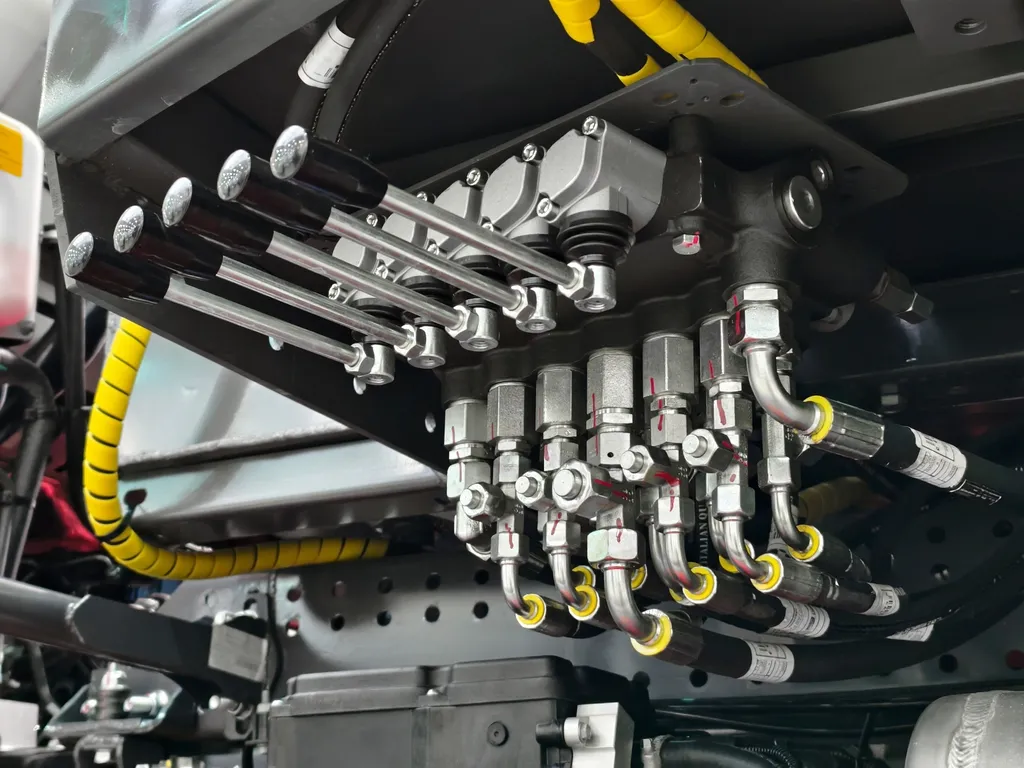
  • Lines routed near access points or walkways
  • Failures occurring during operation rather than start-up or shutdown
  • Confined spaces where mist or spray can accumulate
  • Situations where operators attempt to identify leaks visually
These conditions don’t change the mechanical nature of the failure, but they significantly change its consequences.

Why small leaks are often underestimated

One of the most consistent patterns in serious hose incidents is that they begin with apparently minor symptoms.

Small leaks are easy to dismiss because they don’t always cause immediate loss of function. Pressure may remain within operating range, and equipment may continue running. This can create a false sense of control.

In practice, small leaks often indicate:
Internal damage progressing faster than external signs suggest
Reinforcement layers already compromised
Pressure spikes stressing weakened sections
Fluid escaping at velocities that are not visually obvious
From a safety standpoint, these conditions are unstable. What appears manageable can change rapidly, particularly under load or temperature variation.

When response speed becomes critical

Once a failure introduces safety risk, time becomes a decisive factor.

Delays increase the likelihood of:

  • Secondary failures as pressure redistributes
  • Fluid spreading into unintended areas
  • Escalation from a single component issue to a system-wide shutdown
  • Increased exposure for personnel attempting to assess the problem
This is why many industrial sites treat certain hose failures as immediate response events rather than maintenance tasks to be scheduled later.

Operational consequences beyond the repair

Safety-related hose failures tend to carry impacts that extend beyond the physical repair itself.

These can include:
  • Mandatory shutdowns or isolation procedures
  • Incident reporting and investigation requirements
  • Environmental cleanup obligations
  • Lost production time beyond the repair window
  • Increased scrutiny of similar systems across the site
In this context, the cost of the hose or fitting is often negligible compared to the downstream effects of the incident.

Why not all failures are treated the same

From the outside, it can be unclear why one hose failure results in a quick fix while another triggers a full site response. The difference usually lies in risk assessment, not severity of damage.

Key considerations include:
  • Was the failure controlled or uncontrolled?
  • Was pressurised fluid exposed to people or ignition sources?
  • Did the failure occur under load?
  • Is there confidence that the cause is isolated?
Where uncertainty exists, conservative decisions tend to follow.

What this means for maintenance and planning

Understanding when hose failures cross into safety incidents affects how organisations approach maintenance and response planning.

It reinforces the importance of:
  • Treating high-pressure systems as safety-critical assets
  • Recognising that visible condition alone is not a reliable risk indicator
  • Prioritising response capability, not just component quality
  • Framing hose integrity as part of operational risk management
That context is what separates routine interruptions from events with wider consequences.

FAQs about hydraulic hose failures

When the failure introduces uncontrolled pressure, fluid exposure, or uncertainty that places people, equipment, or the environment at risk.

Higher pressure increases fluid velocity and energy, making even small breaches potentially hazardous.

Yes. Small leaks can indicate internal damage and may produce high-velocity spray that is difficult to detect visually.

Shutdown decisions are driven by exposure risk, pressure conditions, and confidence in containment, not just the size of the failure.

Yes. Delayed response increases the likelihood of escalation, secondary damage, and wider exposure.

TRADING HOURS

Monday - Friday
8 AM - 4:30 PM
Saturday
8:30 AM - 12:30 PM
Sunday
CLOSED
On-Site
24 Hour Service
© Copyright Ace Hoses 2026 All Rights Reserved